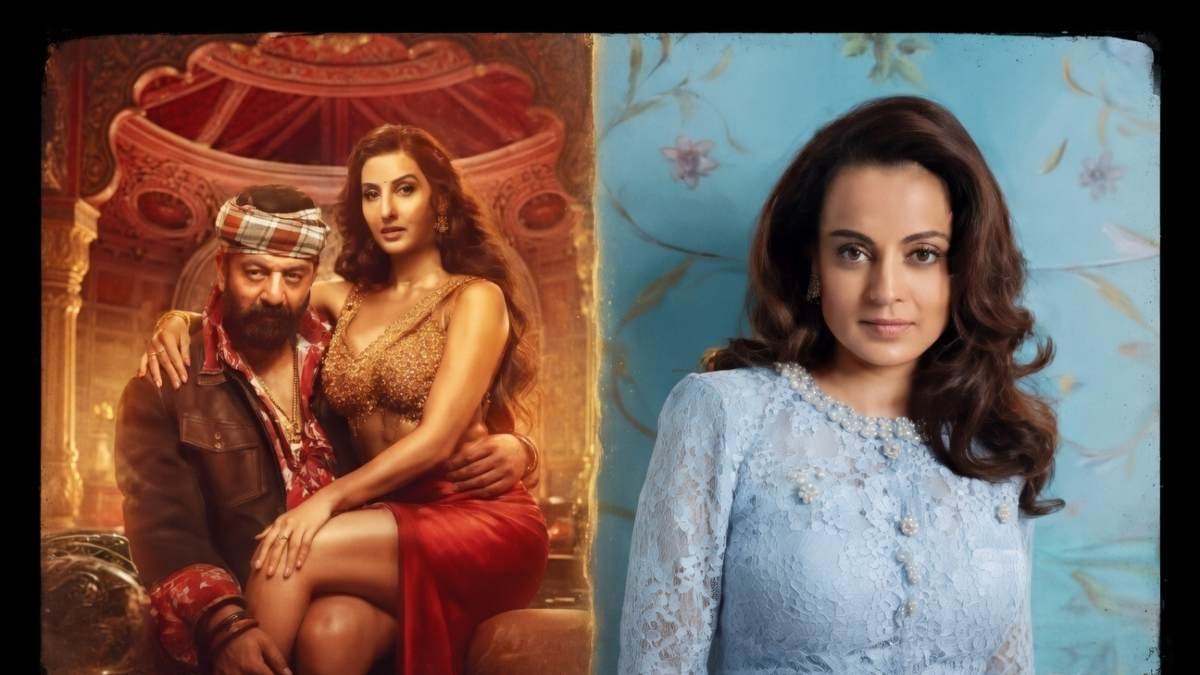
In the glamorous yet unpredictable world of Bollywood, a new song featuring Nora Fatehi has sparked a controversy no one expected. Actor and MP Kangana Ranaut reacted sharply, saying, “Cheap tactics, attention seeking ke liye hadd paar kardi hai.” Her comment has set off a storm online, with fans reacting strongly and critics debating the issue.
The song, Sarke Chunar Teri Sarke, featuring Sanjay Dutt, is not just another dance track. It has now become one of the most talked-about controversies in Bollywood in 2026. Here’s a closer look at why this song has divided opinions and triggered such strong reactions.
Table of Contents
ToggleThe Buzz Around ‘Sarke Chunar Teri Sarke’
The song is a high-energy item number set in a dance bar, with flashy visuals, multiple dancers, and stylish choreography. Nora Fatehi brings her usual bold and energetic performance, while Sanjay Dutt appears in a special role.
The track is part of the upcoming Kannada action film KD: The Devil. It features Hindi vocals by Mangli and music by Arjun Janya, aiming for a pan-India audience.
As soon as the song was released, fans rushed to watch it online. But the excitement quickly turned into criticism. What started as a trending release soon became a major controversy, with many questioning the content of the song.
Lyrics Controversy Sparks Debate
At first, the song appears to be a typical upbeat dance number. However, the lyrics raised eyebrows. Many viewers pointed out the use of double meaning lines that they felt were too suggestive for a mainstream audience.
The choreography, combined with the bar setting and bold visuals, added to the criticism. Some people accused the song of objectifying women and lowering creative standards in the industry.
Singer Armaan Malik also reacted, reportedly calling it “a new low” in commercial songwriting.
Following multiple complaints and notices, the song was removed from YouTube. Despite this, clips and discussions continue to circulate online, keeping the controversy alive.
Kangana Ranaut’s Strong Reaction
Kangana Ranaut did not hold back when speaking about the song. She said Bollywood has “crossed all limits” and criticized what she called vulgar content and publicity tactics.
Known for openly speaking against industry practices, Kangana’s reaction struck a chord with many people. Over the years, she has raised issues like nepotism and objectification, and this time too, she positioned her criticism as a call for better standards in cinema.
Her statement turned the debate even bigger, with supporters agreeing and others defending creative freedom.
Why the Song Faced Such Backlash
Bollywood has seen bold songs before, but many felt this one went too far. The combination of explicit lyrics and Sanjay Dutt’s presence created an unusual contrast that didn’t sit well with some viewers.
The timing also played a role. In recent years, there has been growing discussion around responsible content in entertainment. Against that backdrop, this song was seen by many as out of touch.
Social media trends like #BollywoodVulgarity and #NoraFatehiNewSongBacklash quickly picked up, showing how strongly people felt about it.
Nora Fatehi’s Career and Industry Pressure
Nora Fatehi has built a strong reputation as a top performer, known for hit songs like “Dilbar” and “Kamariya.” Her dance skills and screen presence have made her popular across audiences.
However, this controversy raises questions about the pressure to create viral content. Item songs often become quick ways to grab attention, but they also come with risks.
For many fans, the situation highlights the difficult choices artists face between staying relevant and maintaining a certain image.
Sanjay Dutt’s Appearance and Bigger Industry Questions
Sanjay Dutt’s cameo added star value to the song, but it also brought more attention to the controversy. Some viewers felt that a senior actor being part of such a track was disappointing.
The makers defended the song as high-energy entertainment. However, public reaction suggests that expectations from Bollywood are changing.
The incident has once again raised questions about creativity, content quality, and the race for viral success in the industry.
Comparison: Song vs Industry Standards
| Aspect | ‘Sarke Chunar Teri Sarke’ | Earlier Popular Item Songs | Kangana Ranaut’s View |
|---|---|---|---|
| Lyrics | Highly suggestive, double meaning | Catchy but less explicit | Called “cheap tactics” |
| Presentation | Bold dance bar setting | Glamorous stage visuals | Says limits crossed |
| Public Reaction | Strong backlash, removed online | Mixed but mostly popular | Calls for dignity |
| Star Presence | Sanjay Dutt cameo | Usually solo or new stars | Wants stricter norms |
| Impact | Major controversy in 2026 | Long-term popularity | Sparks debate |
Conclusion:
A Wake-Up Call for Bollywood ?
The controversy around this song is far from over. Kangana Ranaut’s comments have pushed the conversation into the spotlight.
While Nora Fatehi remains a talented performer, the debate shows that audiences are becoming more aware and vocal about content quality. The industry may need to rethink its approach to entertainment.
This song may eventually fade from headlines, but the discussions it has triggered could have a lasting impact on Bollywood.
FAQs
Q1: What is ‘Sarke Chunar Teri Sarke’?
It is a dance number from the film KD: The Devil featuring Nora Fatehi and Sanjay Dutt.
Q2: Why did Kangana Ranaut criticize the song?
She called it “cheap attention-seeking” and said Bollywood has crossed limits in terms of content.
Q3: What is the main issue with the song?
Many viewers found the lyrics and visuals too suggestive and inappropriate.
Q4: Is the song still available online?
The official video was removed after complaints, though clips are still circulating.
Q5: Has Nora Fatehi faced backlash before?
She has done bold songs earlier, but this controversy is one of the biggest so far.
Disclaimer
This article is for informational purposes only. It is based on public reactions, reports, and ongoing discussions. Opinions may vary, and readers are encouraged to form their own views.