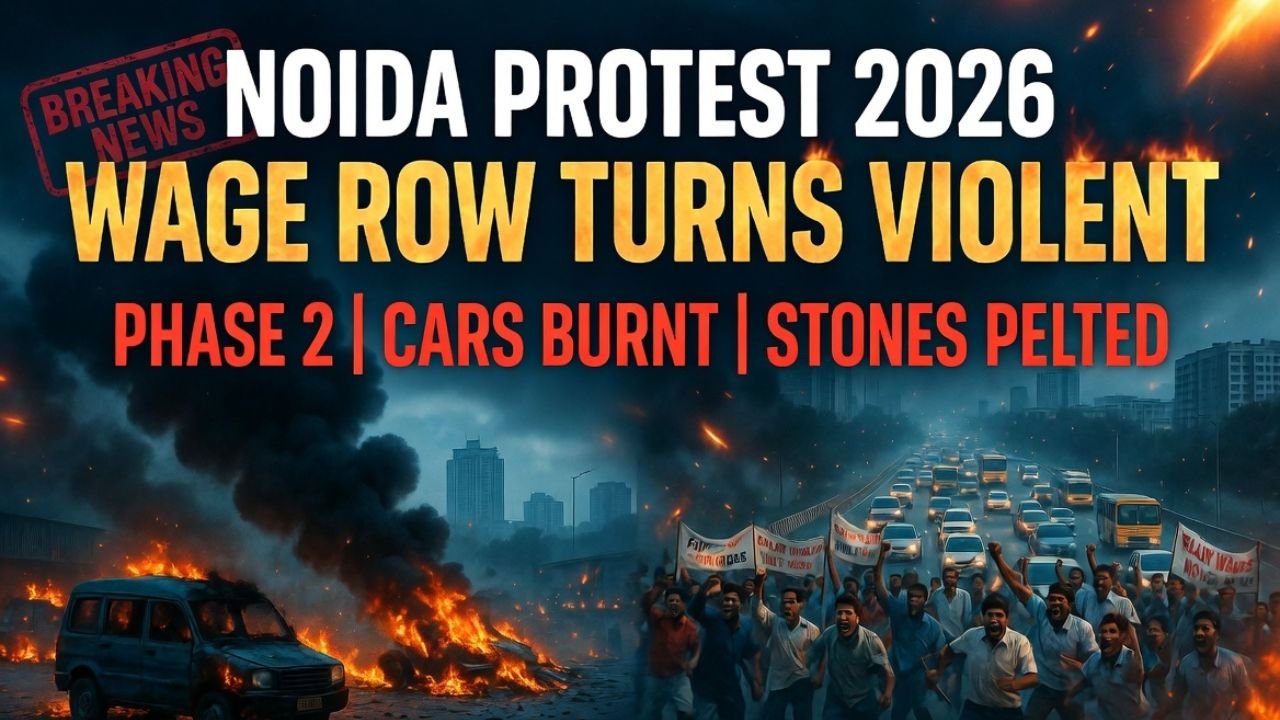
The Noida protest 2026 has taken a serious turn, with thousands of factory workers hitting the streets and parts of the city witnessing chaos. What started as a peaceful demand for better wages quickly escalated into clashes, leaving roads blocked, vehicles damaged, and commuters stuck for hours.
The situation unfolded mainly in Phase 2 and nearby industrial areas, bringing attention to the growing frustration among workers in one of NCR’s biggest industrial hubs.
Why Did the Noida Protest Start?
The protest began after a major wage gap came into focus. In neighbouring Haryana, minimum wages were increased by around 35% from April 1, 2026. Workers there now earn close to ₹580 per day, while many workers in Noida, Uttar Pradesh, still get around ₹350 for similar work.
This difference triggered anger among workers in Noida’s factories, especially in the hosiery and electronics sectors. Around April 10, workers in Sector 84 and Phase 2 started gathering peacefully, demanding equal pay and better working conditions.
Key Demands of Workers
The Noida protest is driven by several basic demands:
- Increase in minimum wages
- Weekly off for workers
- Double payment for overtime and holidays
- Timely salary payments
- Annual bonus before November
- Medical facilities and workplace safety
- Proper grievance systems, especially for women
Workers say they are not asking for luxury, but for fair treatment and basic rights.
How the Protest Turned Violent
On April 13, the situation worsened in Phase 2’s Hosiery Complex. What began as a peaceful march suddenly turned chaotic after an altercation. Reports suggest incidents of stone-pelting, vandalism, and vehicles being set on fire, including a police vehicle.
Police quickly stepped in to control the situation. Tear gas was used, and additional forces were deployed in affected areas like Sector 60 and nearby zones. Videos of the incident spread rapidly on social media, showing the intensity of the clash.
Impact on Daily Life
The Noida protest has badly affected normal life across the city. Major roads, including those near Sector 60, Sector 62, and connecting routes to Delhi, saw heavy traffic jams.
Commuters faced long delays during peak hours, with many taking hours to reach offices. School buses, deliveries, and daily work routines were also disrupted.
The protest not only impacted industries but also highlighted how such unrest affects the entire city.
Government and Police Response
Authorities in Uttar Pradesh responded quickly to control the situation. Local administration officials held meetings with factory representatives and workers, promising to look into their demands.
Police presence has been increased in sensitive areas to maintain law and order. Officials have appealed for calm and urged both sides to resolve the issue through discussion.
The administration has also warned against any violence and asked industries to ensure basic worker rights are followed.
What This Protest Means
The Noida protest 2026 is not just about one city. It reflects a larger issue of wage inequality and working conditions faced by industrial workers.
As cities grow and industries expand, workers expect fair pay and safe environments. This protest has forced attention on these concerns and may push authorities to take stronger action.
Conclusion
The Noida protest has shown how quickly frustration can turn into unrest when basic demands are ignored. While the situation is now under control, the issues raised by workers remain important.
A peaceful solution that addresses both worker needs and industrial stability is the need of the hour.
FAQs
Q1: What caused the Noida protest 2026?
The protest started due to wage differences between Haryana and Uttar Pradesh workers.
Q2: Where did the protest take place?
Mainly in Phase 2, Sector 60, 62, and nearby industrial areas.
Q3: Why did the protest turn violent?
An altercation during the march led to clashes, stone-pelting, and vandalism.
Q4: How has it affected the public?
Traffic jams, delays, and disruptions in daily life across Noida and NCR.
Disclaimer
This article is based on available information as of April 13, 2026. The situation is evolving, and readers should check official updates for the latest developments
