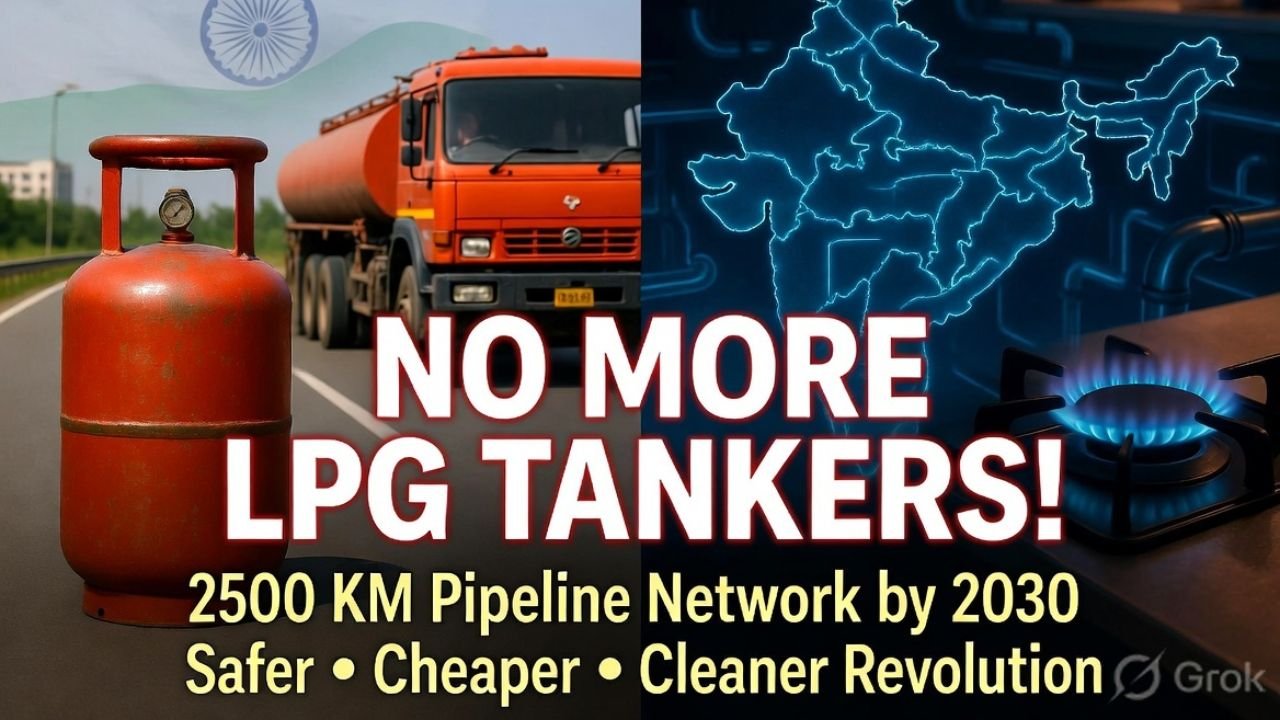
India is set to transform the way LPG reaches homes, with a massive 2500 km pipeline network in the works. This big move could reduce dependence on road tankers and make gas supply faster, safer, and more reliable.
The project is being driven by the Petroleum and Natural Gas Regulatory Board, which has already started the bidding process for multiple pipeline routes. With an investment of around ₹12,500 crore, this initiative is part of a larger plan to modernise India’s energy infrastructure.
What Is Changing in LPG Supply?
Currently, LPG is transported mainly through road tankers from refineries to bottling plants. This process is slow, expensive, and sometimes risky.
With the new pipeline system, bulk LPG will move through underground pipelines directly to bottling plants. This means fewer tankers on roads and a smoother supply chain.
By 2030, the government aims to significantly reduce tanker-based transport and rely more on pipelines.
Key LPG Pipeline Projects
Several major routes are already under development, including:
- Cherlapally to Nagpur
- Shikrapur to Hubli and Goa
- Paradip to Raipur
- Jhansi to Sitarganj
These pipelines will together form a 2500 km network, connecting key regions and improving supply efficiency across the country.
Why This Project Matters
This shift is important for multiple reasons:
1. Better Supply Reliability
Pipelines are not affected by traffic, weather, or road conditions. This ensures steady LPG supply to bottling plants, reducing delays in cylinder delivery.
2. Improved Safety
Transporting LPG through pipelines is safer than moving it via trucks. It reduces the risk of road accidents and leaks.
3. Lower Costs
Pipeline transport is cheaper than road transport. This can reduce logistics costs by up to 30–40%, which may benefit consumers in the long run.
4. Environmental Benefits
Fewer diesel-powered tankers mean lower emissions, helping India move towards cleaner energy goals.
Impact on Households
For everyday users, LPG cylinders are not going away anytime soon. You will still receive cylinders at home. However, the supply chain behind it will become faster and more efficient.
This means:
- Fewer delays in cylinder delivery
- Better availability during peak demand
- More stable supply even in remote areas
Challenges in Implementation
Building such a large pipeline network comes with challenges like land acquisition, environmental approvals, and technical work. However, the government and oil companies are working together to speed up the process.
Major companies are expected to invest in and operate these pipelines as part of the expansion plan.
Future of Gas Supply in India
This LPG pipeline project also supports the larger vision of a gas-based economy. Along with pipelines, the government is expanding Piped Natural Gas (PNG) connections in cities, which may eventually reduce dependence on cylinders in urban areas.
The goal is to create a modern, efficient, and safe energy system across India.
Conclusion
The 2500 km LPG pipeline network is a major step towards improving India’s gas supply system. While cylinders will continue to be used, the backend infrastructure will become more advanced and reliable.
With better safety, lower costs, and improved supply, this project could bring a big change to how LPG reaches millions of homes.
FAQs
Q1: Will LPG cylinders stop after this project?
No, cylinders will continue. The pipeline is for bulk transport.
Q2: When will the pipeline network be ready?
The target is to complete it by 2030.
Q3: Will LPG become cheaper?
Lower transport costs may help reduce prices over time.
Q4: Is this the same as PNG?
No, PNG is direct gas supply to homes, while LPG pipelines are for bulk transport.
Disclaimer
This article is for informational purposes only based on available updates as of April 2026. Project timelines and details may change.
