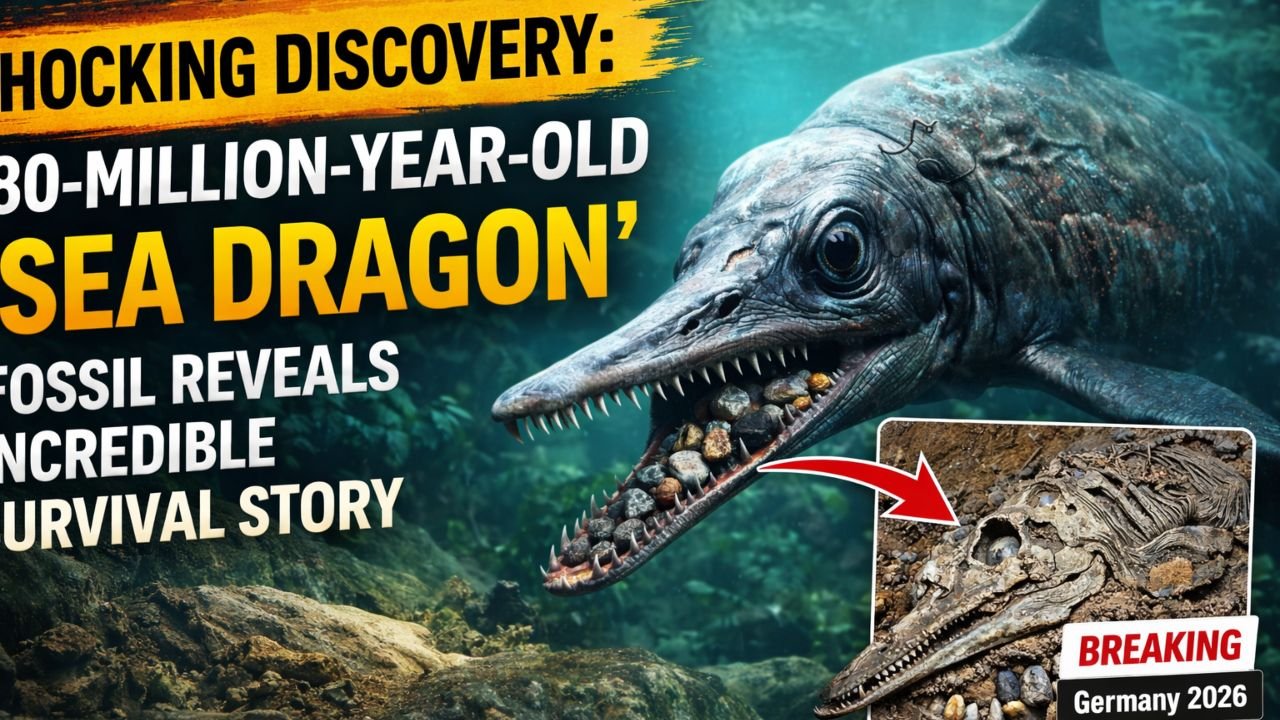
A remarkable new fossil discovery is making headlines in the world of paleontology. Scientists have uncovered a battered yet resilient 180-million-year-old ichthyosaur in northern Germany, offering fresh insights into how these ancient marine predators lived—and survived against the odds.
The fossil, belonging to the genus Temnodontosaurus, was found in a clay pit in Mistelgau near Bayreuth. The findings, recently published in Zitteliana, are reshaping what experts thought they knew about these powerful “sea dragons” of the Jurassic oceans.
Table of Contents
ToggleWhy This Ichthyosaur Discovery Is So Important
Ichthyosaurs, often called “fish lizards,” were not dinosaurs but air-breathing marine reptiles. They evolved streamlined, fish-like bodies similar to modern dolphins—a classic case of convergent evolution.
This particular 180-million-year-old ichthyosaur lived during the Jurassic period, when such creatures ruled the seas while dinosaurs dominated land. What makes this discovery stand out is not just its age, but its story of survival.
The fossil shows clear signs of severe injuries—damage that would have made hunting extremely difficult. Yet, scientists found evidence that the animal continued feeding, even swallowing gastroliths (stomach stones), suggesting it managed to survive despite its condition.
The German Fossil That Tells a Survival Story
Excavations at the Mistelgau clay pit revealed parts of a large skeleton belonging to this ancient predator. Researchers believe it is one of the youngest known members of its genus, extending the known survival timeline of Temnodontosaurus in the region.
Despite serious trauma, the ichthyosaur appears to have continued living and hunting. With over 100 sharp teeth designed to catch fish, squid, and other marine life, it remained a formidable predator even after injury.
This makes the fossil not just a scientific find, but a rare glimpse into the resilience of prehistoric life.
What Made Ichthyosaurs Powerful Ocean Hunters
The 180-million-year-old ichthyosaur had several features that made it one of the top predators of its time:
- A streamlined body for fast and efficient swimming
- Large eyes suited for deep or low-light hunting
- Strong tails and flippers for speed and control
- More than 100 sharp teeth for gripping slippery prey
Some ichthyosaurs even gave birth to live young in the water, meaning they never had to return to land.
Species like Temnodontosaurus could grow over 20 feet long, making them giants of the Jurassic seas. They played a role similar to modern apex predators like orcas.
A Fossil That Connects Past and Present
This discovery is more than just bones in rock. It offers a rare connection to life from 180 million years ago. Fossils like this help scientists understand how ancient ecosystems worked and how species adapted to survive.
The injured yet surviving ichthyosaur stands out as a powerful example of resilience in nature. Even in harsh conditions, life found a way to continue.
Key Facts About the Discovery
| Feature | Details | Significance |
|---|---|---|
| Age | 180 million years | Jurassic period fossil |
| Location | Mistelgau, Germany | Expands known range |
| Genus | Temnodontosaurus | Apex marine predator |
| Teeth | 100+ sharp teeth | Efficient hunter |
| Injuries | Severe skeletal damage | Rare survival evidence |
| Stomach | Gastroliths found | Continued feeding |
| Size | 20+ feet (estimated) | Giant marine reptile |
Why This Discovery Matters Today
The fossil is gaining attention globally, with coverage from major science platforms. It adds to recent ichthyosaur discoveries in the UK and Europe, helping scientists better understand marine life after past extinction events.
More importantly, it reminds us how long and complex Earth’s history is. These creatures ruled the oceans for millions of years before disappearing around 90 million years ago.
Conclusion
The 180-million-year-old ichthyosaur from Germany is not just another fossil—it is a story of survival frozen in time. Despite serious injuries, it continued to live, hunt, and leave behind evidence of its resilience.
Discoveries like this highlight the strength of life in even the toughest conditions. They also remind us how much there is still to learn about the ancient world beneath our feet.
FAQs
Q1: How old is this ichthyosaur fossil?
It is around 180 million years old, dating back to the Jurassic period.
Q2: Where was it discovered?
In a clay pit in Mistelgau, northern Germany.
Q3: What makes this fossil unique?
It shows severe injuries along with signs that the animal survived and continued feeding.
Q4: Were ichthyosaurs dinosaurs?
No, they were marine reptiles that lived during the same era.
Q5: How large could this ichthyosaur grow?
Species like Temnodontosaurus could reach over 20 feet in length.
Disclaimer
This article is based on recent scientific findings and reports as of 2026. Interpretations may change with future research.
Author

मैं विकास शुक्ला, एक पैशनेट कंटेंट क्रिएटर और लेखक हूँ, जो राजनीति, अर्थव्यवस्था, स्टॉक मार्केट और ताज़ा खबरों पर गहराई से लिखता हूँ। मुझे जटिल मुद्दों को आसान और समझने योग्य भाषा में पाठकों तक पहुँचाना पसंद है।
मेरे लेख राजनीति की नीतियों से लेकर स्टॉक मार्केट की हलचल और आम लोगों को प्रभावित करने वाले आर्थिक मुद्दों तक सबकुछ कवर करते हैं। मेरा उद्देश्य है कि पाठकों को न सिर्फ जानकारी मिले, बल्कि उन्हें सही दिशा में सोचने और निर्णय लेने की प्रेरणा भी मिले।
👉 मैं ब्लॉग आर्टिकल्स, न्यूज़ एनालिसिस और ट्रेंडिंग टॉपिक्स पर लगातार लिखता हूँ ताकि हर पाठक को भरोसेमंद और निष्पक्ष जानकारी मिल सके।
