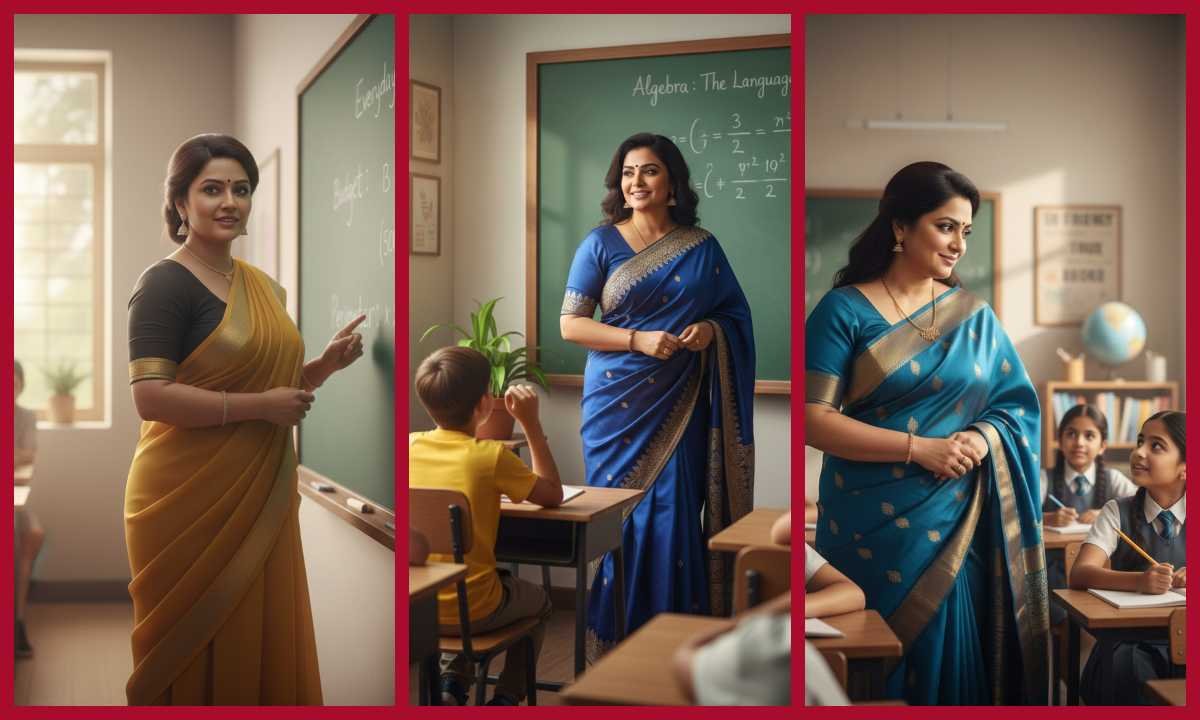
Learning is a journey, and every classroom tells a story. Especially in India, the traditional classroom is a vibrant world of curiosity, culture, and connection. Imagine a curvy Indian woman in a saree, sitting among students, deeply engaged in the rhythm of learning. The elegance of her attire mirrors the grace of focused study, reminding us that learning is as much about presence as it is about knowledge.
In this blog, we explore 20 prompts that highlight the beauty of focused learning in traditional classrooms and how small actions, gestures, and moments create unforgettable experiences.
1. Embracing the Classroom Energy
Walking into a classroom full of attentive faces, you feel the pulse of curiosity. Observing a student’s expressions, their excitement and confusion, teaches the observer more than textbooks ever could.
2. The Power of Teacher-Student Eye Contact
A teacher’s gaze holds power. It reassures, corrects, and encourages. The subtle smile of a curvy Indian woman in a saree, guiding her students, embodies patience and warmth.
3. Notes That Speak Volumes
Handwritten notes on paper tell stories of focus. When you see a classroom where students meticulously jot down ideas, it reflects the beauty of traditional learning.
4. Active Listening as a Skill
Focused learning thrives on listening. In a classroom, every question asked and answered becomes a thread connecting minds.
5. Interactive Discussions
Learning isn’t passive. Interactive discussions allow students to voice thoughts, challenge ideas, and refine knowledge. The presence of engaged learners enriches the atmosphere.
6. The Visual Elegance of Saree
In India, the saree is not just attire; it is a statement. A curvy woman in a saree leading the class brings cultural pride, confidence, and elegance into the learning environment.
7. Learning Through Storytelling
Stories make lessons memorable. The classroom becomes a stage where tales, analogies, and examples transform abstract ideas into relatable experiences.
8. Group Activities and Team Spirit
Traditional classrooms often encourage group work. Watching students collaborate, share responsibilities, and learn together embodies the essence of focused, experiential learning.
9. Celebrating Small Achievements
Every completed task, every correct answer is celebrated. Focused learning thrives on recognition and encouragement, fostering motivation.
10. Respecting Silence
Silent moments in a classroom are sacred. They allow reflection, absorption, and the growth of concentration.
11. Personal Attention from the Teacher
One-on-one guidance makes a difference. The curvy woman in a saree leaning down to clarify doubts shows the human touch that digital learning often lacks.
12. Emotional Connections
A classroom isn’t just a place of academics; it’s a hub of emotions. Empathy, encouragement, and gentle correction create lifelong memories.
13. Hands-On Learning
Practical exercises, experiments, or demonstrations keep students rooted in reality. Focused observation here is key to understanding.
14. Celebrating Cultural Identity
Integrating culture into learning makes lessons relatable. Sarees, festivals, and local traditions make the classroom a mirror of life.
15. Overcoming Distractions
Focused learning requires overcoming interruptions. Watching a student or teacher regain attention reflects dedication and mindfulness.
16. Encouraging Curiosity
Curiosity fuels learning. Questions, hypotheses, and explorations keep classrooms alive.
17. Learning Through Peer Feedback
Peers often provide insights that teachers can’t. Constructive criticism and supportive dialogue create a strong learning network.
18. The Charm of Human Interaction
Touch, gesture, eye contact, and laughter—these human elements make learning immersive and unforgettable.
19. The Beauty of Consistency
Regular attendance, participation, and revision make traditional classrooms a space of discipline and growth.
20. Leaving a Legacy
The lessons learned, the friendships forged, and the inspiration felt stay with students forever. A focused classroom experience shapes minds and hearts alike.
Top 20 Prompts in a Column Table
| No | Prompt | Key Learning Element |
|---|---|---|
| 1 | Embracing the Classroom Energy | Engagement |
| 2 | Teacher-Student Eye Contact | Reassurance & Guidance |
| 3 | Handwritten Notes | Focus & Retention |
| 4 | Active Listening | Concentration |
| 5 | Interactive Discussions | Critical Thinking |
| 6 | Visual Elegance of Saree | Cultural Pride & Confidence |
| 7 | Learning Through Storytelling | Retention & Relatability |
| 8 | Group Activities | Collaboration |
| 9 | Celebrating Small Achievements | Motivation |
| 10 | Respecting Silence | Reflection |
| 11 | Personal Attention | Individual Growth |
| 12 | Emotional Connections | Empathy & Support |
| 13 | Hands-On Learning | Practical Skills |
| 14 | Celebrating Cultural Identity | Identity & Relevance |
| 15 | Overcoming Distractions | Focus & Discipline |
| 16 | Encouraging Curiosity | Exploration |
| 17 | Peer Feedback | Constructive Learning |
| 18 | Charm of Human Interaction | Engagement & Memory |
| 19 | Consistency | Discipline & Growth |
| 20 | Leaving a Legacy | Lifelong Impact |
Conclusion
Focused learning in a traditional classroom is a delicate blend of knowledge, culture, emotion, and human connection. The presence of teachers and students who are engaged, patient, and culturally rooted adds layers of depth to education. Observing a curvy Indian woman in a saree navigating her classroom is a celebration of elegance, grace, and the beauty of learning with intent.
FAQs
Q1: Why is traditional classroom learning still relevant?
A1: It fosters human interaction, focused attention, and cultural immersion, which digital learning often lacks.
Q2: How can a teacher make a classroom more engaging?
A2: Through storytelling, interactive discussions, hands-on activities, and personal attention.
Q3: What role does attire play in a classroom?
A3: It can boost confidence, represent cultural identity, and inspire students through visual elegance.
Q4: Can focus be improved in a traditional classroom?
A4: Yes, through active listening, regular practice, and minimizing distractions.
Disclaimer
This blog is intended for informational and educational purposes. The descriptions and scenarios depicted are fictional and meant to highlight the beauty of traditional classroom learning. Any resemblance to real persons is purely coincidental.