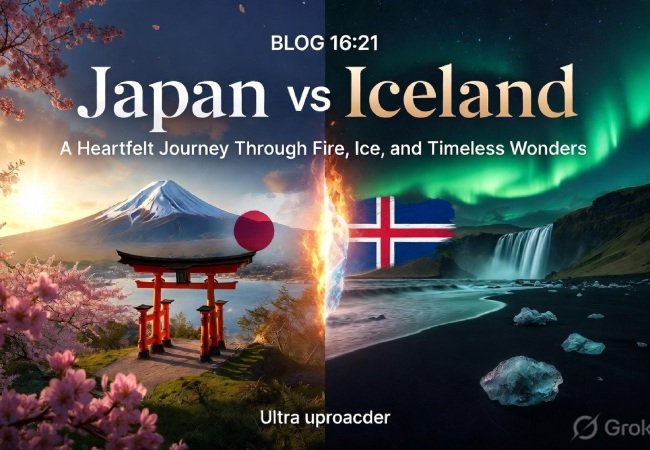
Have you ever dreamed of visiting a place that feels completely different from your everyday life? Some travelers imagine walking beneath pink cherry blossoms in Japan, while others picture standing under the magical Northern Lights in Iceland. Both countries are unforgettable, but they offer very different experiences.
The Japan vs Iceland debate is not about which country is better. It is about finding the destination that matches your travel style, interests, and dreams. From culture and food to landscapes and adventure, here’s a closer look at what makes these two island nations so special.
Nature: Beauty in Two Different Forms
When it comes to natural beauty, Japan and Iceland offer completely different experiences.
Iceland is known for its dramatic landscapes. Volcanoes, glaciers, waterfalls, black sand beaches, and geothermal lagoons create scenery that feels almost unreal. Popular attractions like the Blue Lagoon, Golden Circle, and Ring Road attract visitors from around the world.
Japan, on the other hand, offers a more peaceful and balanced connection with nature. The country is famous for its cherry blossom season, colorful autumn leaves, beautiful mountains, and relaxing hot springs. Mount Fuji remains one of the most iconic sights in Asia.
While Iceland impresses visitors with its raw power and wild landscapes, Japan wins hearts with its seasonal beauty and calm atmosphere.
Culture and History
One of the biggest differences in the Japan vs Iceland comparison is culture.
Japan has a history that stretches back thousands of years. Ancient temples, shrines, castles, tea ceremonies, and traditional festivals remain an important part of everyday life. At the same time, cities like Tokyo and Osaka showcase some of the world’s most advanced technology and innovation.
Iceland’s culture is deeply connected to its Viking heritage. The country is known for its rich storytelling traditions, folklore, and strong sense of community. Reykjavik, the capital city, combines modern creativity with historical charm.
Both countries value their traditions, but Japan offers a much deeper historical and cultural experience for travelers who enjoy exploring heritage sites.
Food: A Completely Different Experience
Food is another area where Japan and Iceland stand apart.
Japanese cuisine is famous worldwide for dishes such as sushi, ramen, tempura, and sashimi. Meals often focus on fresh ingredients, balanced flavors, and beautiful presentation.
Icelandic food reflects the country’s natural environment. Seafood, lamb, rye bread, and dairy products are popular. Traditional dishes may be less familiar to international visitors, but they offer a unique taste of Icelandic culture.
For travelers who enjoy culinary exploration, Japan generally provides more variety and global appeal. However, Iceland offers fresh and authentic local flavors that many visitors appreciate.
Technology and Sustainability
Japan is known as one of the world’s most technologically advanced nations. High-speed bullet trains, robotics, smart cities, and efficient public transport systems make traveling easy and exciting.
Iceland leads in sustainability. Nearly all of its electricity comes from renewable energy sources, mainly geothermal and hydroelectric power. The country is often considered a global model for clean energy.
Both nations demonstrate how innovation can improve daily life, though they focus on different priorities.
Travel Experience and Adventure
The overall travel experience varies greatly between the two destinations.
In Japan, travelers can enjoy a mix of city life, cultural exploration, shopping, temples, and scenic countryside. The country’s excellent transportation network makes it easy to move between destinations.
In Iceland, adventure takes center stage. Road trips, glacier hikes, volcano tours, whale watching, and Northern Lights excursions are among the biggest attractions.
Travelers seeking cultural immersion may prefer Japan, while outdoor enthusiasts and adventure lovers may find Iceland more appealing.
Japan vs Iceland Comparison
| Aspect | Japan | Iceland |
|---|---|---|
| Nature | Mountains, gardens, cherry blossoms | Glaciers, volcanoes, waterfalls |
| Culture | Ancient traditions and modern cities | Viking heritage and folklore |
| Food | Sushi, ramen, diverse cuisine | Seafood, lamb, local specialties |
| Adventure | Temples, cities, hiking | Road trips, glaciers, Northern Lights |
| Cost | Moderate to high | Generally expensive |
| Best Time to Visit | Spring and autumn | Summer and winter |
| Sustainability | Advanced green technology | Renewable energy leader |
Conclusion
Choosing between Japan and Iceland is not easy because both destinations offer something extraordinary.
Japan combines history, culture, food, technology, and natural beauty in a way few countries can match. Iceland delivers breathtaking landscapes, unforgettable adventures, and some of the most unique scenery on Earth.
If you love culture, food, and city life mixed with tradition, Japan may be the perfect choice. If you dream of dramatic landscapes, road trips, and outdoor adventures, Iceland could be your ideal destination.
No matter which country you choose, both promise memories that will stay with you for a lifetime.
FAQs
Which country is better for first-time international travelers?
Japan offers excellent infrastructure and transportation, making it very convenient for tourists. Iceland is easy to explore but can feel more remote.
Is Iceland more expensive than Japan?
Yes, Iceland is generally more expensive, especially for accommodation, food, and transportation.
When is the best time to visit Japan?
Spring for cherry blossoms and autumn for colorful foliage are the most popular seasons.
When is the best time to visit Iceland?
Winter is ideal for Northern Lights, while summer offers long daylight hours and easier road travel.
Which country is better for nature lovers?
Both are excellent choices. Japan offers seasonal beauty, while Iceland provides dramatic landscapes and natural wonders.
Disclaimer: This article is for informational purposes only. Travel costs, visa requirements, weather conditions, and local regulations may change over time. Always check official sources before planning your trip.
