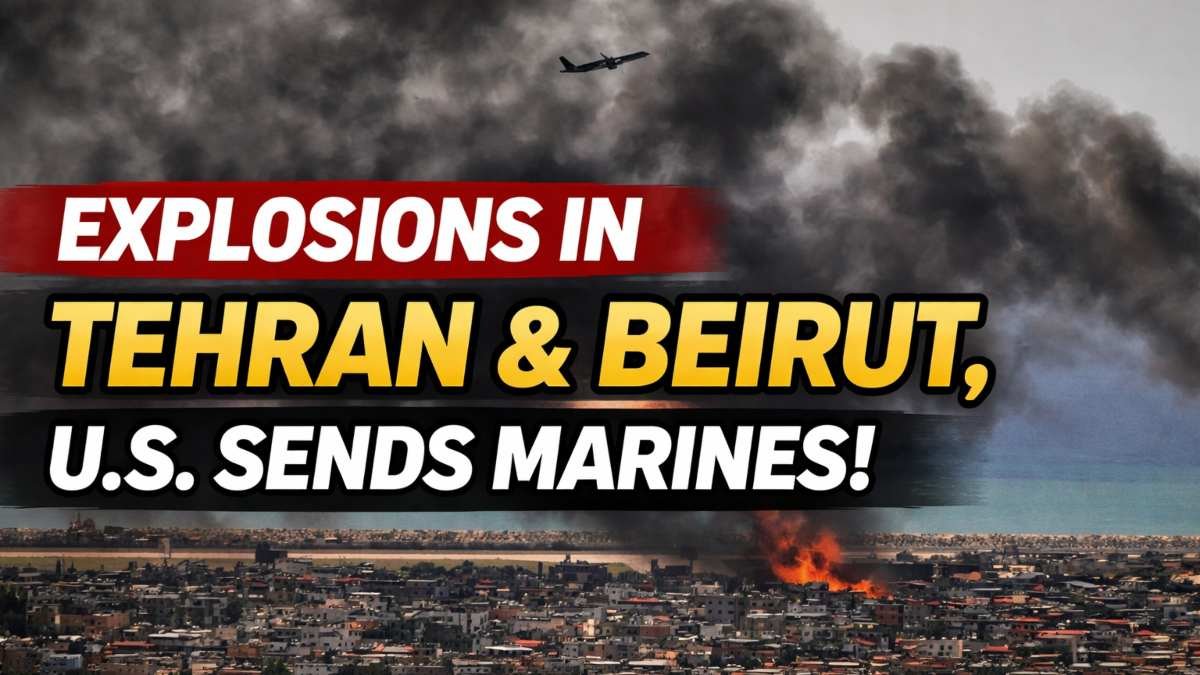
The skies over Tehran and Beirut lit up once again on March 21, 2026, as loud explosions echoed through the night. Israel carried out fresh strikes on what it described as “regime targets” in Iran’s capital and Hezbollah positions in Lebanon’s southern suburbs. At the same time, the United States sent thousands of additional Marines to West Asia, raising fears of a wider conflict.
This latest escalation has left millions anxious, wondering if peace is still possible.
Tensions have been building for years, but this moment feels different. Families in Tehran woke up to air raid sirens, while people in Beirut once again faced evacuation warnings. These events are not just headlines—they mean destroyed homes, disrupted lives, and an uncertain future. As global oil prices rise and diplomatic efforts struggle, the situation is becoming more serious.
Table of Contents
ToggleThe Latest Strikes: What Happened in Tehran and Beirut
Early Saturday, Israeli forces launched multiple airstrikes targeting military infrastructure in Tehran. Iranian media reported hits near important areas in and around the capital, as well as in central provinces. Explosions shook neighborhoods, while air defense systems lit up the sky trying to intercept incoming threats.
At the same time, Israel targeted Hezbollah positions in Beirut’s southern suburbs. Before the strikes, evacuation warnings were issued in several areas. Lebanese health officials reported casualties during the attacks, adding to the growing toll.
These developments come as Iran continues to fire missiles toward Israel and US bases in the region. The back-and-forth strikes show no signs of stopping, with civilians caught in the middle.
US Marines Deployment: Rising Tensions in West Asia
As the situation escalated, the United States took quick action. Around 2,500 additional Marines have been deployed to West Asia, along with amphibious assault ships like the USS Boxer. The aim is to strengthen defense, support allies, and secure key routes such as the Strait of Hormuz.
President Donald Trump has hinted at possibly reducing operations but has not announced any immediate ceasefire. While the deployment shows US commitment, it also raises concerns—whether this is a step toward calming tensions or preparing for something bigger.
For many families of US service members, the crisis now feels closer to home.
Human Cost: The Reality Behind the Headlines
Imagine waking up to the sound of fighter jets and explosions, unsure what will happen next. In Tehran, people are taking shelter in basements as missiles pass overhead. In Beirut, families are rushing to leave their homes, hoping to stay safe.
The number of casualties continues to rise, including civilians caught in the crossfire. In Lebanon, hundreds of thousands have been forced to leave their homes. The emotional impact is severe—families losing loved ones, communities breaking apart, and children growing up in the middle of conflict.
These moments highlight how fragile peace can be.
Why This Crisis Matters Around the World
This conflict is not limited to one region. Oil prices are rising as threats to shipping routes in the Gulf increase, affecting economies globally. People everywhere are feeling the impact through higher fuel costs.
Diplomatic efforts are also facing challenges, with countries divided on how to respond. Social media discussions show growing fears of a larger war, nuclear risks, and a worsening humanitarian crisis.
This situation is quickly becoming one of the most important global crises of 2026.
Geopolitical Tensions: What Lies Ahead?
Iran has promised retaliation, targeting both Israeli and US interests. Hezbollah’s involvement is pulling Lebanon deeper into the conflict. At the same time, coordination between the US and Israel is under scrutiny, with questions about their long-term strategy.
World leaders are calling for calm, but actions on the ground suggest tensions are still rising. The US military presence signals readiness, even as many continue to hope for diplomatic solutions.
Comparison Table: Key Elements of the Crisis
| Aspect | Israel Attacks on Tehran | Strikes on Beirut (Hezbollah Targets) | US Marines Deployment to West Asia |
|---|---|---|---|
| Primary Targets | Military sites, regime infrastructure | Hezbollah positions, southern suburbs | Defensive support, security |
| Reported Casualties | Military and civilian reports | Dozens reported in Lebanon | Not applicable |
| Global Impact | Oil price surge, nuclear concerns | Humanitarian crisis in Lebanon | Increased US presence |
| Retaliation Risk | High (Iran missile strikes) | Ongoing Hezbollah response | Risk of wider conflict |
| Diplomatic Response | Iran threatens escalation | Evacuation warnings issued | Trump considers de-escalation |
This shows how closely connected these developments are.
Conclusion: A Critical Moment for the World
The latest escalation, along with the deployment of US Marines to West Asia, marks a serious and dangerous phase. Lives are at risk, economies are under pressure, and the chances of peace seem uncertain.
However, history shows that even major conflicts can be resolved through dialogue and restraint. As the world watches closely, the hope remains that leaders will choose peace over further destruction.
FAQs
Q1: What triggered the latest attacks on Tehran and Beirut?
They are part of ongoing retaliation, including Iran’s missile strikes and Hezbollah’s involvement, within the broader conflict involving the US and Israel.
Q2: How many US Marines have been deployed?
Around 2,500 additional Marines, along with naval support, have been sent to the region.
Q3: Is there a risk of nuclear involvement?
There are concerns, especially after reports of strikes near sensitive sites, but no confirmed nuclear incidents so far.
Q4: How is this affecting oil prices?
Threats to key shipping routes like the Strait of Hormuz have caused oil prices to rise globally.
Q5: Is the conflict coming to an end?
While there are talks of reducing tensions, ongoing strikes and deployments suggest the situation is still active.
Disclaimer
This article is based on publicly available reports as of March 21, 2026. The situation is changing quickly, and details may be updated. This content is for informational purposes only and does not represent any official position. Readers are advised to follow trusted news sources for the latest updates.