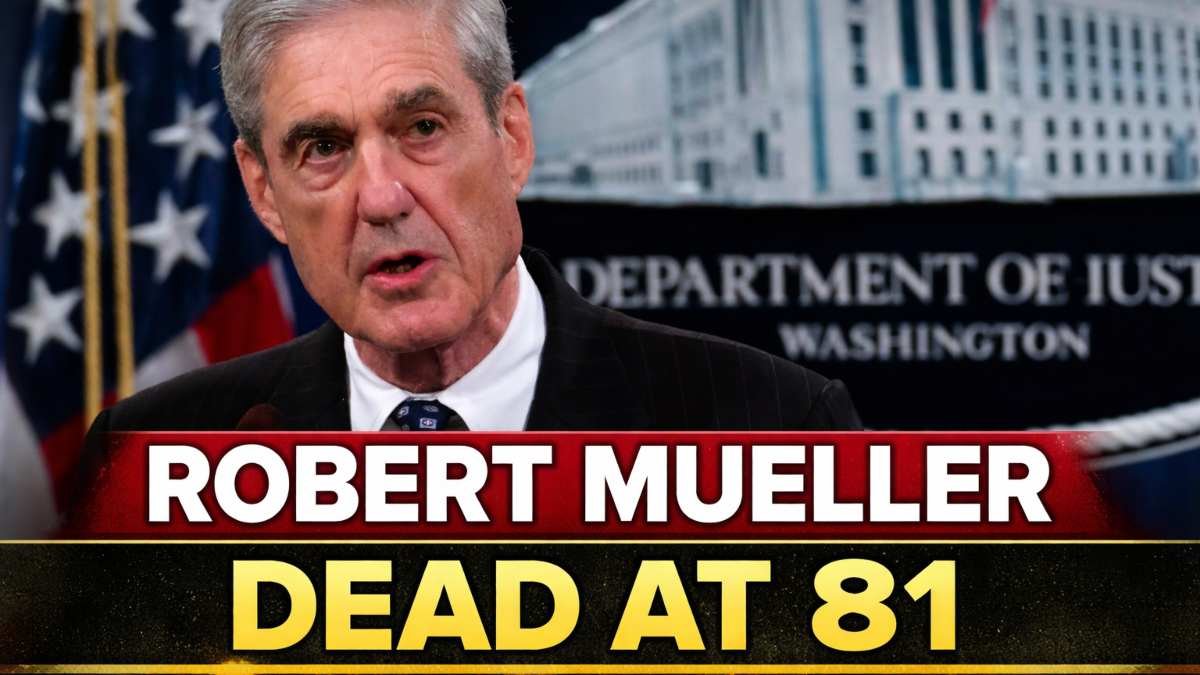
The news came quietly but hit hard on March 20, 2026. Robert S. Mueller III, the former FBI Director and Special Counsel, has died at the age of 81. In a time filled with loud debates and constant headlines, Mueller was known for his calm and disciplined approach. His death marks the end of a long career in public service—one that changed the FBI and led one of the most talked-about investigations in recent history. As tributes come in, many are remembering him as a symbol of honesty during difficult times.
A Life of Service: From Vietnam to the Marines
Robert S. Mueller III was born on August 7, 1944, in New York City. His journey into leadership began with service and sacrifice. After graduating from Princeton, he joined the U.S. Marine Corps and served in the Vietnam War. He received a Purple Heart and a Bronze Star with Valor for his bravery.
People who knew him often said that behind his calm nature was a strong and determined personality shaped by war. Many of us admire those who lead by actions, not words—and Mueller was exactly that.
Before becoming FBI Director in 2001, just days before the 9/11 attacks, he had already built a strong reputation in law enforcement for being fair and determined.
Rebuilding the FBI After 9/11
The 9/11 attacks changed the United States forever. Robert S. Mueller III took charge of the FBI at a time when the agency faced serious criticism. He led major changes, shifting focus towards counterterrorism and improving intelligence systems.
His leadership from 2001 to 2013 is often seen as the most important transformation in FBI history. During this time, the agency worked to prevent multiple threats while also trying to protect civil liberties. Mueller served under two presidents and earned respect from both sides of politics.
The Trump-Russia Investigation
In 2017, Robert S. Mueller III was appointed Special Counsel to investigate Russian interference in the 2016 U.S. election and possible obstruction of justice.
The investigation gained huge attention across the country. It led to charges against several Russian operatives and people connected to Donald Trump. Mueller’s report said that Russia did interfere in the election to help Trump, but it did not prove that Trump’s campaign worked directly with Russia.
On the question of obstruction, Mueller said he could neither fully clear nor accuse the president, leaving the matter for Congress and the public to decide. The investigation divided opinions—some praised it, while others called it unfair. Still, Mueller remained focused on facts throughout.
Criticism and Political Pressure
During the investigation, Donald Trump often criticized Robert S. Mueller III, calling the probe a hoax and questioning his role. Even after Mueller’s death, Trump reacted strongly on Truth Social, saying, “Good, I’m glad he’s dead.”
These reactions show how deeply the investigation affected politics. Despite the pressure, Mueller stayed firm and did not change his approach.
In today’s fast-moving and often angry world, Mueller’s calm way of handling things stood out.
Health Struggles and Final Years
Robert S. Mueller III was diagnosed with Parkinson’s disease in 2021. He kept his health issues private and retired from work in 2022. His family shared the news of his passing with sadness, remembering his lifelong commitment to service.
Key Moments in Mueller’s Career
- Vietnam War Service (1968–1969): Awarded Purple Heart and Bronze Star
- FBI Director Appointment (2001): Took charge just before 9/11
- FBI Reforms (2001–2013): Major changes focused on counterterrorism
- Special Counsel Role (2017): Led Trump-Russia investigation
- Mueller Report (2019): Found Russian interference, no proven conspiracy
- Parkinson’s Diagnosis (2021): Health challenges began
- Death (2026): Passed away at 81
Conclusion
The death of Robert S. Mueller III at 81 brings attention to a life built on duty and discipline. From his time in the military to leading the FBI and handling a major political investigation, he worked through difficult situations with calm and focus.
People may have different opinions about his work, but his commitment to facts and fairness remains important. His life shows the value of staying steady, even during uncertain times.
FAQs
Q1: When did Robert S. Mueller III die?
He passed away on March 20, 2026, at the age of 81 in Charlottesville, Virginia. No exact cause was shared, but he had Parkinson’s disease.
Q2: What was his biggest achievement as FBI Director?
He led major reforms that turned the FBI into a strong counterterrorism agency after 9/11.
Q3: What did the Mueller Report say?
It confirmed Russian interference in the 2016 election but did not prove coordination with Trump’s campaign. It also did not clearly accuse or clear the president on obstruction.
Q4: How did Donald Trump react?
Trump criticized Mueller even after his death, posting negatively on Truth Social.
Q5: What illness did he have?
He was diagnosed with Parkinson’s disease in 2021.
Disclaimer
This article is based on publicly available information as of March 2026. It is meant for general awareness and does not support any political view. Readers are encouraged to refer to official sources for more details.