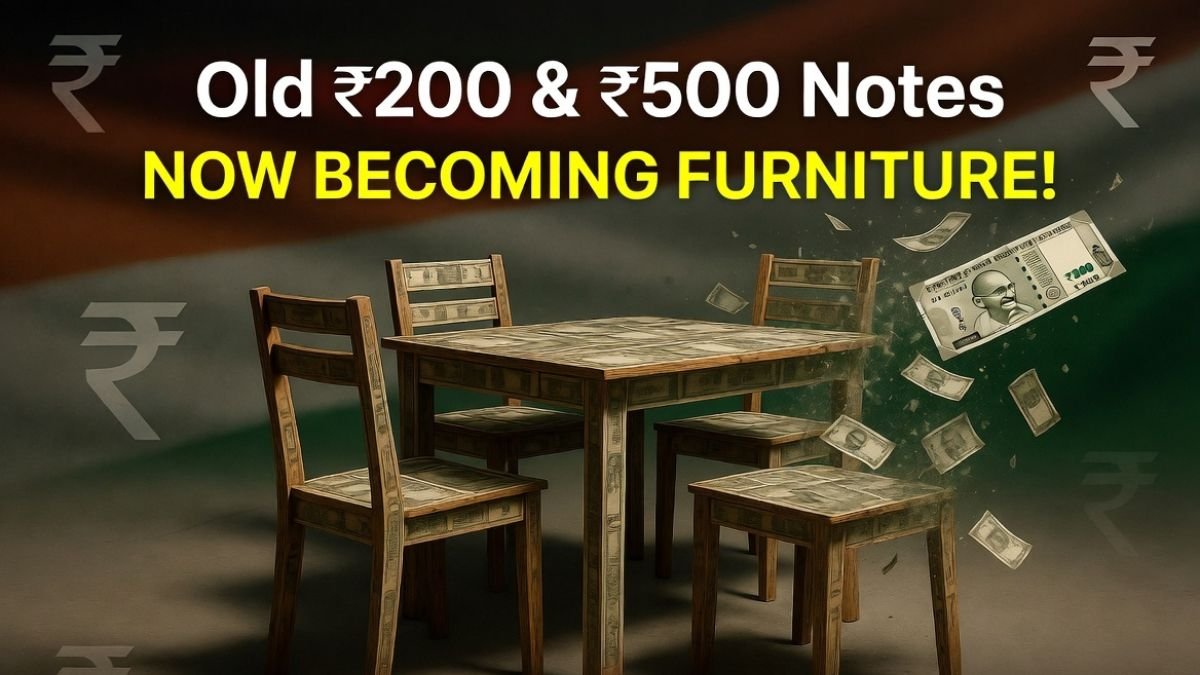
Pull out an old ₹200 or ₹500 note from your wallet—the one that’s torn, faded, or folded too many times. Usually, it feels useless. But now, that same note could become part of your dining table or bookshelf. Thanks to a new plan by the Reserve Bank of India, old notes may soon get a second life as eco-friendly furniture.
This is not a concept or experiment. It’s part of India’s push towards sustainability. The RBI has introduced a recycling initiative to convert damaged and unfit currency into particle boards used in furniture. Every year, millions of old ₹200 and ₹500 notes are removed from circulation. Instead of being dumped or burned, they will now be reused in a practical way.
Table of Contents
ToggleWhy Old ₹200 and ₹500 Notes Matter Now
Many people have faced this situation—handing over an old note at a shop and being told it won’t be accepted. These notes, with tears or fading, often end up in banks. Earlier, such currency was destroyed through shredding and disposal, which added to pollution.
Now, things are changing. Old ₹200 and ₹500 notes form a large part of unfit currency because they are widely used. India generates around 15,000 tonnes of such currency waste every year. Instead of harming the environment, these notes will now be turned into useful products.
RBI’s Plan: From Waste Notes to Furniture
The process is simple and efficient. Banks collect damaged notes and send them to RBI centers. There, machines shred the notes into small pieces and compress them into blocks for recycling.
The RBI worked with the Institute of Wood Science and Technology to test how this material can replace wood in particle boards. The result is strong, durable boards that can be used to make furniture like chairs, tables, and cupboards.
These boards are not only sturdy but also termite-resistant. Manufacturers approved by RBI will use them to produce furniture. In simple terms, old currency will now become part of everyday household items.
A New Way to Reuse Old Currency
This plan is not limited to small trials. It is designed to work on a national level. The idea is to create a circular system where waste is reused instead of thrown away.
Every old ₹200 or ₹500 note collected today could be used in furniture tomorrow. It’s a practical way to reduce waste and make better use of resources.
Environmental Benefits
Traditional furniture relies heavily on wood, which leads to deforestation and environmental damage. RBI’s plan helps reduce this impact.
By recycling around 15,000 tonnes of currency waste each year:
- Fewer trees will be cut
- Landfill waste will decrease
- Pollution from burning notes will reduce
This approach supports a cleaner and greener environment while still meeting demand for furniture.
When Will This Furniture Be Available?
The RBI has started selecting manufacturers for this project. Initial pilot work is already underway. Full-scale production is expected to increase soon.
In the coming months, furniture made from recycled ₹200 and ₹500 notes may start appearing in markets across major cities like Delhi, Mumbai, and Bangalore.
Traditional vs Recycled Currency Furniture
| Feature | Traditional Wood Furniture | Furniture from Old ₹200/₹500 Notes |
|---|---|---|
| Environmental Impact | High (deforestation, emissions) | No trees cut, fully recycled |
| Durability | Good but needs maintenance | Strong and termite-resistant |
| Cost | Higher due to raw wood | More affordable |
| Uniqueness | Standard designs | Unique concept with story |
| Sustainability | Low | High |
Conclusion
RBI’s plan is not just about recycling—it’s about using resources wisely. Old ₹200 and ₹500 notes that once moved through daily life may soon become part of homes in a new form.
This initiative shows how small changes can make a big difference. Instead of being wasted, old currency is being reused in a meaningful way. As the project moves forward, it could change how India handles waste and promotes sustainability.
Next time you exchange an old note, remember—it might not be the end of its journey.
FAQs
Q1. What are old ₹200 and ₹500 notes?
These are damaged, torn, or unusable notes that are removed from circulation.
Q2. Will all such notes be recycled?
The plan aims to recycle most of the 15,000 tonnes of currency waste generated every year.
Q3. When will the furniture be available?
It is expected to reach markets within the next 12–18 months.
Q4. Is this furniture safe and durable?
Yes, tests confirm it meets standard safety and strength requirements.
Q5. How does this help the environment?
It reduces pollution and saves trees by replacing wood in furniture.
Disclaimer
This article is for informational purposes only. It is based on RBI’s 2024–25 Annual Report and available updates as of April 2026. Availability and timelines may change. Always check official updates from RBI or authorized manufacturers before making a purchase.
Author

मैं विकास शुक्ला, एक पैशनेट कंटेंट क्रिएटर और लेखक हूँ, जो राजनीति, अर्थव्यवस्था, स्टॉक मार्केट और ताज़ा खबरों पर गहराई से लिखता हूँ। मुझे जटिल मुद्दों को आसान और समझने योग्य भाषा में पाठकों तक पहुँचाना पसंद है।
मेरे लेख राजनीति की नीतियों से लेकर स्टॉक मार्केट की हलचल और आम लोगों को प्रभावित करने वाले आर्थिक मुद्दों तक सबकुछ कवर करते हैं। मेरा उद्देश्य है कि पाठकों को न सिर्फ जानकारी मिले, बल्कि उन्हें सही दिशा में सोचने और निर्णय लेने की प्रेरणा भी मिले।
👉 मैं ब्लॉग आर्टिकल्स, न्यूज़ एनालिसिस और ट्रेंडिंग टॉपिक्स पर लगातार लिखता हूँ ताकि हर पाठक को भरोसेमंद और निष्पक्ष जानकारी मिल सके।
