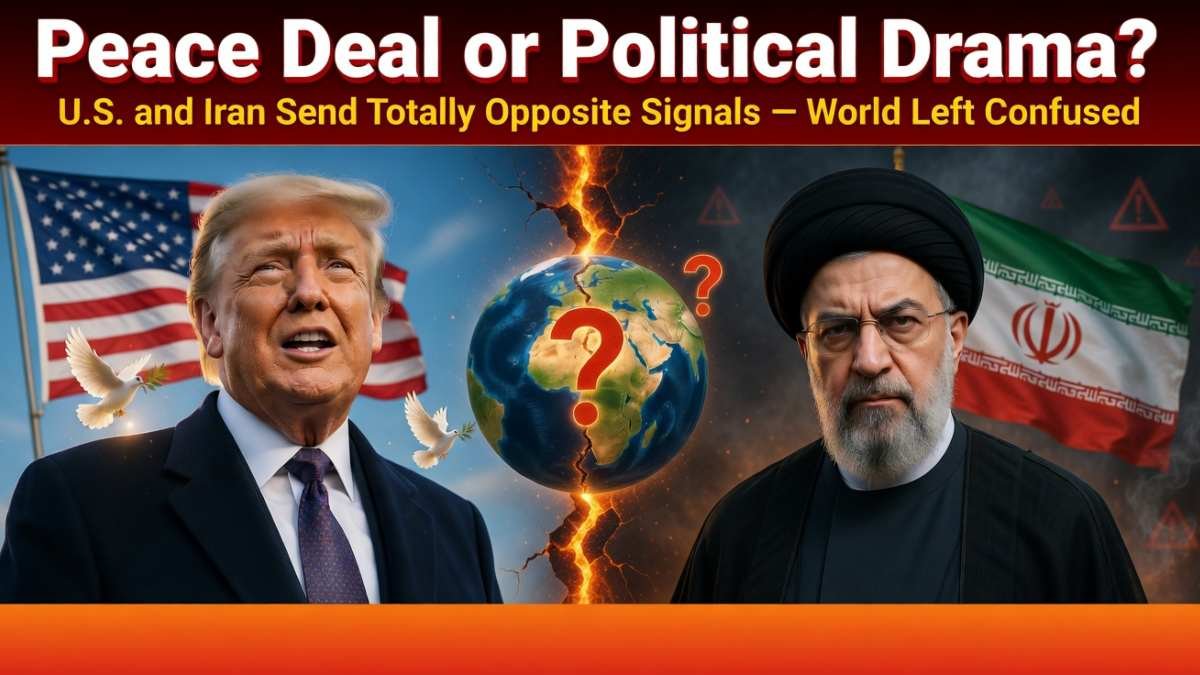
In a world already tired of conflict, the latest signals from the United States and Iran have left millions confused and anxious. On March 23, 2026, President Donald Trump said there had been “very good and productive conversations” with Iran. He even claimed both sides were close to ending tensions in the Middle East.
But within hours, Iran strongly denied this. Top officials said no such talks had taken place. This sharp contradiction has raised serious questions: Is peace really near, or is this just political messaging?
With the war now in its fourth week, the situation is serious. Lives are at risk, oil markets are unstable, and families across the region are hoping for calm. Here’s a clear breakdown of what’s happening.
Table of Contents
ToggleTrump’s Big Claim: Is Peace Close?
President Trump sounded very positive. While speaking to reporters and on social media, he said U.S. officials — including Jared Kushner and special envoy Steve Witkoff — had held important talks over the weekend.
He described the discussions as “very strong” and said there were already “15 points of agreement.”
Trump also announced a major step: a five-day pause on planned U.S. attacks on Iran’s energy and power infrastructure. According to him, this was to allow time for a “complete and total resolution.”
For many people watching, this brought a small sense of hope after weeks of rising tension around the Strait of Hormuz and nuclear issues.
Iran Responds: “No Talks Happened”
Iran reacted quickly and clearly. Parliament Speaker Mohammad Bagher Ghalibaf called Trump’s statement “fake news.” He said it was an attempt to influence oil markets and shift attention from U.S.-Israel issues.
Iran’s Foreign Ministry also confirmed: “There is no dialogue between Tehran and Washington.”
State media went further, saying Trump’s statement showed weakness after Iran’s warnings. Officials made it clear that Iran’s stance on the Strait of Hormuz and its war goals has not changed.
For many in Iran, this response showed strength and resistance after years of sanctions and pressure.
Hidden Communication: Talks Through Middlemen
Even though both sides disagreed publicly, reports suggest something else is happening quietly.
Officials say messages are being exchanged through other countries like Turkey, Egypt, and Pakistan. These indirect talks are focused on reducing tensions and avoiding attacks on key energy sites.
U.S. sources have also admitted there is indirect contact. While there are no face-to-face meetings, efforts are being made behind the scenes to stop the war and deal with nuclear concerns.
This shows that while leaders deny things publicly, some level of communication is still ongoing.
Why This Matters Globally
These mixed signals are not just political news — they affect people everywhere.
After Trump’s statement, oil prices dropped, giving hope to markets. But after Iran’s denial, prices became unstable again. This impacts fuel prices, transport costs, and even daily expenses worldwide.
In the Middle East, people are living in fear of further escalation. Around the world, leaders are worried the conflict could spread.
The reality is simple: when powerful countries send mixed messages, ordinary people feel the impact the most.
The Human Side of the Conflict
For people living in affected areas, this situation is deeply emotional.
Every day brings uncertainty — will there be peace or more violence? Trump’s side talks about stopping Iran’s nuclear program. Iran talks about protecting its sovereignty.
Behind all this are real people — families, workers, and communities — trying to survive.
Diplomacy may sound technical, but its effects are very personal.
Comparison Table: What’s Being Said vs What’s Happening
| Aspect | Trump / U.S. Position | Iran’s Official Position | Reported Reality |
|---|---|---|---|
| Direct Talks | “Very good conversations” | “No talks — fake news” | No direct talks, only indirect messages |
| Strike Pause | 5-day delay in attacks | Seen as U.S. backing down | Meant to allow de-escalation |
| Key Issues | Stop nuclear weapons, remove uranium | No change in goals | Focus on ending conflict and nuclear concerns |
| Market Impact | Calm oil markets | Accused of manipulation | Oil prices fluctuated |
| Future Outlook | Hope for full resolution | No talks before goals met | Mediation ongoing via other countries |
Conclusion:
Right now, the situation is unclear. The U.S. is talking about progress and peace. Iran is denying any talks and standing firm.
But behind the scenes, some communication is happening. This creates a small but important chance for peace.
One thing is certain — ending a conflict like this takes time, patience, and compromise. Whether this moment leads to real progress or more tension is still unknown.
For now, the world can only watch and hope things move towards peace.
FAQs
Q1: Did the U.S. and Iran have direct talks?
No. Trump claimed progress, but Iran denied any talks. Only indirect communication has been confirmed.
Q2: Why did Trump pause attacks for 5 days?
He said it was to allow time for discussions and possible resolution, especially on nuclear issues and the Strait of Hormuz.
Q3: Who are the intermediaries?
Countries like Turkey, Egypt, and Pakistan are helping pass messages between the two sides.
Q4: How did markets react?
Oil prices first dropped due to hope for peace, then became unstable after Iran denied talks.
Q5: What are the main issues?
Key concerns include Iran’s nuclear program, enriched uranium, the Strait of Hormuz, and overall regional conflict.
Disclaimer
This article is based on publicly available information as of March 24, 2026. The situation may change quickly. This content is for informational purposes only and does not support any political side. Readers should follow multiple trusted sources for updates.