Imagine stepping into your favourite dhaba on a cool March evening. The air is different today — heavier, smokier, more alive. You look toward the kitchen and see something that stopped existing years ago: a real wood fire dancing beneath a massive kadhai. A stack of coal glows red beside the clay stove. The cook fans the flame with a steel plate, just as his father taught him. For a moment, you forget you are in 2026.
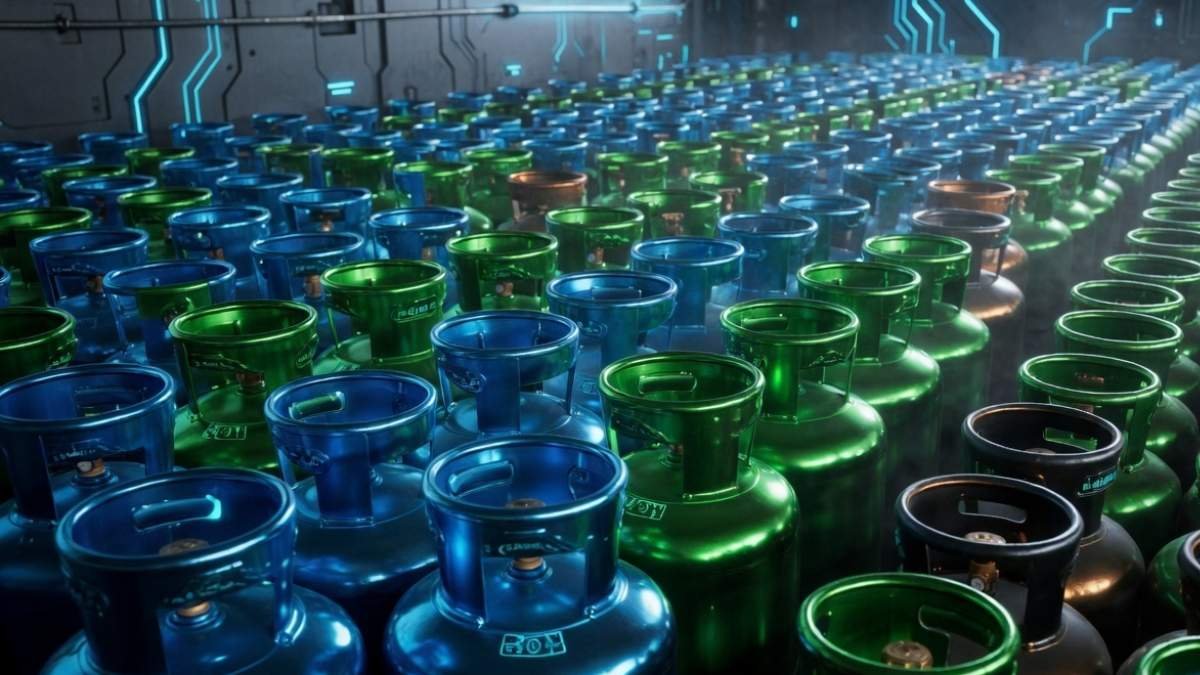
This is not a scene from a vintage film. This is happening right now across India — in dhabas on national highways, in restaurants across city lanes, in street food corners from Kashmir to Kanyakumari. The Iran War has sent LPG gas cylinder prices to historic highs, forcing the food industry into a powerful and emotional return to its roots.
Wood. Coal. Chulha. Mud ovens. In 2026, these are survival tools. They are reshaping how India cooks, how food tastes, and how the restaurant business thinks about energy, cost, and identity. This blog tells that story — in full, with fire.
The Iran War: How One Conflict Hit Every Kitchen in India
The Iran War, which escalated sharply in the second half of 2025 following renewed military confrontations in and around the Strait of Hormuz, sent immediate shockwaves through global energy markets. The Strait of Hormuz is the world’s most critical oil and gas chokepoint — roughly one-fifth of all global LPG shipments pass through this narrow waterway. When it became a conflict zone, the consequences for global LPG gas cylinder supply were swift and severe.
Iran is among the world’s top producers of liquefied petroleum gas. The Iran War choked Iranian LPG exports and disrupted the broader Gulf shipping system that delivers LPG gas cylinders to importing nations like India. The result was a textbook supply shock: too few LPG gas cylinders chasing too much global demand.
India felt the impact almost immediately. Commercial LPG gas cylinder prices — the lifeline of every restaurant, dhaba, and street kitchen — climbed from Rs 1,680-1,780 per 19-kg cylinder before the Iran War to Rs 2,400-2,700 per cylinder by early 2026. That is a 40 to 55 percent increase in a core operating cost, in one of the world’s most price-sensitive food markets.
Key Fact: India consumes over 30 million commercial LPG gas cylinders monthly. A Rs 700 average price rise per LPG gas cylinder means Rs 21,000 crore in additional monthly costs for India’s commercial food sector.
For a small eatery using 8 to 12 LPG gas cylinders every month, this meant Rs 6,000 to Rs 10,000 in extra monthly fuel costs — money that businesses running on 5 to 12 percent margins simply did not have. The Iran War did not just destabilise a region. It destabilised the economics of every kitchen that depends on an LPG gas cylinder.
LPG Gas Cylinder Prices: The Numbers Behind the Revolution
To understand the retro cooking revolution sweeping India, you need to see the LPG gas cylinder price data plainly. These numbers explain the entire story.
| Time Period | Commercial LPG Gas Cylinder Price (19 kg) | Change vs Pre-War |
| Pre-Iran War (2024) | Rs 1,680 to Rs 1,780 | Baseline |
| Early Iran War (Q3 2025) | Rs 2,000 to Rs 2,200 | Up approx 25 percent |
| Escalation Phase (Q4 2025) | Rs 2,300 to Rs 2,500 | Up approx 40 percent |
| Current (March 2026) | Rs 2,400 to Rs 2,700 | Up 45 to 55 percent |
| Wood / Coal Equivalent Cost | Rs 600 to Rs 900 per unit | 65 to 70 percent cheaper |
When wood and coal deliver equivalent cooking output at 65 to 70 percent lower cost than an LPG gas cylinder, the business case for switching is not merely logical — it is urgent. For lakhs of small eateries, the LPG gas cylinder crisis triggered by the Iran War has made the decision simple: switch or shut down.
The Great Retro Shift: Wood, Coal and Chulha Come Roaring Back
When business survival is at stake, change happens fast. And in 2026, change in India’s food industry looks remarkably like tradition. From highway dhabas to inner-city restaurants to corner street stalls, the move away from LPG gas cylinders toward wood and coal has become one of the most significant operational shifts the food business has seen in decades.
“I spent Rs 22,000 a month on LPG gas cylinders. Now I spend Rs 7,000 on wood and coal. My dal tastes smokier and my customers love it more than before.” — Suresh Mehta, Dhaba Owner, NH-58, Uttar Pradesh
In Punjab and Haryana, highway dhabas that had converted their tandoors to LPG gas cylinder burners years ago are converting them back to coal and wood. In Mumbai’s Mohammed Ali Road, legendary coal-fired kebab grills are burning bright again after shifting to LPG gas cylinders for operational convenience. In Delhi’s Chandni Chowk, wood-smoke threads through alleys that had been gas-clean for years. In Chennai’s Parrys Corner, wood-fired idli steamers have re-emerged in street kitchens.
Across tier-2 and tier-3 cities — Jabalpur, Jodhpur, Vijayawada, Siliguri, Nashik — the trend is equally strong. Local wood and coal suppliers report demand surges of 40 to 60 percent over the past six months, almost entirely driven by the LPG gas cylinder price crisis caused by the Iran War.
The message from India’s kitchens is unmistakable: when the LPG gas cylinder becomes unaffordable, the Indian food industry does not fold. It remembers. It adapts. It returns to fire.
Who Is Switching and How: Segment by Segment
The response to the LPG gas cylinder crisis is not uniform. Different types of eateries are navigating the transition differently based on their kitchen design, customer base, and financial cushion.
Street Food Vendors: The fastest and most complete switchers. Many already used coal or wood informally alongside LPG gas cylinders. The price surge made the switch final. Most report monthly savings of Rs 3,000 to Rs 6,000.
Small Dhabas and Roadside Restaurants: Emotionally and operationally well-suited for the switch. Many owners remember the pre-LPG gas cylinder era and have welcomed wood and coal as much for cultural pride as financial survival. Customer feedback on flavour has been overwhelmingly positive.
Mid-Sized Urban Restaurants (50 to 120 covers): More complex transition. Kitchens designed around LPG gas cylinder infrastructure need ventilation upgrades, equipment changes, and staff retraining. Many are running hybrid systems — solid fuels for tandoor and grilling, LPG gas cylinder for precise cooking tasks.
Premium and Fine Dining: The most enthusiastic adopters from a branding perspective. Wood-fired and charcoal-grilled dishes are being positioned as premium artisanal offerings. The LPG gas cylinder crisis has handed upscale restaurants an unexpected marketing gift.
Cloud Kitchens and QSR Chains: Most resistant to switching. Compact kitchens are ill-suited for solid fuels. Most are absorbing the LPG gas cylinder cost increase and partially passing it on through higher delivery prices while exploring CNG and induction alternatives urgently.
Beyond India: A Global Retro Cooking Revolution
The LPG gas cylinder crisis caused by the Iran War is a global phenomenon, and so is the retro fuel revolution it has ignited worldwide.
In Bangladesh and Indonesia, traditional clay stoves are making dramatic comebacks in commercial kitchens. In Turkey and Lebanon, wood-fired cooking has surged in both homes and restaurants. In Sri Lanka, where LPG gas cylinder shortages have been a recurring crisis, biomass stoves are now standard equipment in thousands of eateries. In southern Europe — Greece, Italy, Portugal — where gas prices were already elevated from the Russia-Ukraine conflict, the Iran War’s additional pressure on LPG gas cylinder availability has accelerated the return to wood pellets, olive wood fires, and traditional stone ovens.
The Iran War has become an unlikely global catalyst for the rediscovery of ancient cooking techniques — techniques that produce flavours no LPG gas cylinder can match. The world is going retro, one firewood bundle at a time.
The Real Challenges: Beyond the Romance of Open Fire
The retro revolution is a powerful story. But running a commercial kitchen on wood and coal instead of LPG gas cylinders comes with serious, practical challenges every owner must understand honestly.
Air Quality and Health: Wood and coal combustion produces particulate matter and carbon monoxide at far higher levels than LPG gas cylinder combustion. In dense urban areas, widespread return to solid fuels raises genuine public health concerns. Several cities have air quality regulations restricting commercial wood and coal burning that are now under pressure from the LPG gas cylinder crisis.
Regulatory Complexity: There is no unified national policy on commercial solid fuel cooking. State and municipal regulations vary widely. Some cities explicitly prohibit open coal burning in commercial kitchens. Restaurant owners face real legal risk without verifying local compliance requirements.
Cooking Consistency: LPG gas cylinders deliver clean, instantly adjustable heat. Wood and coal do not. Maintaining consistent food quality across hundreds of covers in a busy service requires significant retraining and process redesign when switching from LPG gas cylinders.
Safety Hazards: Solid fuel kitchens carry higher fire risk, carbon monoxide exposure, and burn injury risk than LPG gas cylinder kitchens. Proper ventilation, fire suppression systems, and staff safety protocols are essential and add to transition costs.
Rising Solid Fuel Prices: With demand for wood and coal surging due to the LPG gas cylinder crisis, their prices are themselves climbing — up 25 to 35 percent in many markets this year. The cost advantage over LPG gas cylinders remains large, but the gap is narrowing.
Silver Linings: Lessons the LPG Gas Cylinder Crisis Is Teaching India
Every crisis carries hidden lessons. The Iran War-driven LPG gas cylinder shock is teaching India’s food industry some of the most important lessons it has encountered in a generation.
The most immediate benefit is flavour. Wood and coal generate higher, more complex, more fluctuating temperatures than LPG gas cylinder burners. They impart smoky, charred, deeply aromatic notes that gas simply cannot produce. The Maillard reaction — responsible for golden bread crusts, charred kebabs, and caramelised rotis — is dramatically enhanced by solid fuel cooking.
Flavour Science: Coal and wood fires reach surface temperatures of 350 to 500 degrees Celsius with natural fluctuation — ideal for deep Maillard browning. LPG gas cylinder burners typically deliver 180 to 220 degrees Celsius of steady, controlled heat — efficient, but flavour-flat by comparison.
Consumer response has been remarkable. Social media in 2026 overflows with food content celebrating real coal-fire kebabs, authentic wood-oven breads, and smoky wood-fired biryanis. The LPG gas cylinder crisis has accidentally made traditional fire cooking aspirational, premium, and Instagram-worthy.
The crisis has also forced a critical conversation about energy diversification in the food sector. Biomass pellets, biogas from kitchen waste, solar-powered induction cooking, and piped CNG are all being seriously explored as long-term LPG gas cylinder alternatives. The Iran War may end — but the food industry’s dangerous dependence on a single fuel source will remain a strategic priority long after peace returns.
Full Comparison: LPG Gas Cylinder vs Wood vs Coal for Commercial Kitchens (2026)
| Parameter | LPG Gas Cylinder | Wood | Coal |
| Monthly Fuel Cost (average) | Rs 20,000-27,000 | Rs 5,000-8,000 | Rs 7,000-12,000 |
| Cost vs LPG Gas Cylinder | Baseline | 65-75% Cheaper | 50-60% Cheaper |
| Ease of Use | Very High | Moderate | Moderate to Low |
| Flavour Output | Neutral / Clean | Smoky / Earthy | Deep / Charred |
| Heat Consistency | Excellent | Variable | Moderate |
| Air Pollution Risk | Low | High | Very High |
| Urban Regulatory Risk | Low | Medium to High | High |
| Staff Skill Required | Low | High | High |
| Supply Stability 2026 | Volatile / Costly | Relatively Stable | Mostly Stable |
| Consumer Perception | Neutral | Premium / Rustic | Authentic / Bold |
| Best Suited For | QSR and Cloud Kitchens | Tandoor, Roti, Pizza | Kebabs, Biryani, Grill |
| Environmental Impact | Lower GHG | High if unsustainable | Highest GHG |
| Equipment Transition Cost | None | Rs 15,000-35,000 | Rs 20,000-40,000 |
| Payback Period on Switch | N/A | 2 to 3 months | 2 to 4 months |
Conclusion: The Fire That the Iran War Lit in India’s Kitchens
The Iran War was not supposed to change how a dhaba owner in Haryana cooks dal makhani. It was not supposed to bring the coal hearth back to Mumbai’s kebab lanes or the wood fire back to Chennai’s idli corners. And yet here we are — watching a crisis-driven retro revolution unfold across the full breadth of India’s extraordinary food landscape.
The LPG gas cylinder price shock triggered by the Iran War has done what years of nostalgia campaigns could not: it has made traditional fire-based cooking mainstream again. Not as a lifestyle aesthetic but as a financial necessity that revealed itself to be a cultural treasure.
The challenges are real. Air pollution, regulatory uncertainty, cooking inconsistency, and safety risks cannot be romanticised. The LPG gas cylinder will return to accessible pricing eventually, and many kitchens will return to it. But when they do, they will carry a newly earned respect for the fire that sustained Indian cooking for millennia before the LPG gas cylinder ever arrived.
The Iran War will end. The Strait of Hormuz will reopen. LPG gas cylinder prices will normalise. But the lesson of 2026 will endure: that India’s food industry is resilient, resourceful, and far more flavourful than it ever gave itself credit for. Great food was born in fire. And fire will always find a way.
Frequently Asked Questions (FAQs)
Q1. Why are restaurants abandoning LPG gas cylinders for wood and coal?
The core reason is the dramatic surge in commercial LPG gas cylinder prices — up 40 to 55 percent — caused by the Iran War’s disruption of global LPG supply through the Strait of Hormuz. Wood and coal deliver equivalent cooking output at 60 to 70 percent lower cost, making the switch an economic necessity for most small and mid-sized eateries.
Q2. What is the current commercial LPG gas cylinder price in India (March 2026)?
As of March 2026, a commercial 19-kg LPG gas cylinder is priced between Rs 2,400 and Rs 2,700 in most Indian cities, up from Rs 1,680-1,780 before the Iran War. Prices vary by city, state, and distributor.
Q3. Is switching from LPG gas cylinders to wood or coal legally permitted for restaurants?
Legal status varies by city and state. Tandoor cooking with coal has a long regulatory history in India and is generally permitted. Open wood burning in urban commercial kitchens may violate local air quality and fire safety regulations in some cities. Restaurant owners must verify applicable local rules before switching from LPG gas cylinders.
Q4. Does food taste different cooked on wood or coal compared to LPG gas cylinder?
Most chefs and food lovers say yes and better. Wood and coal impart smoky, charred, and deeply aromatic flavours that LPG gas cylinder cooking cannot replicate. The intense heat of solid fuels enhances the Maillard reaction, producing richer colour, deeper aroma, and more complex taste — especially in grilled meats, tandoor breads, slow-cooked curries, and biryani.
Q5. How much can a restaurant save monthly by switching from LPG gas cylinders?
A typical mid-sized restaurant using 10 to 12 LPG gas cylinders per month can save Rs 14,000 to Rs 22,000 monthly by switching to coal or wood at current 2026 prices. Initial equipment modification costs of Rs 15,000 to Rs 40,000 are typically recovered within 2 to 3 months.
Q6. Will LPG gas cylinder prices fall after the Iran War ends?
Energy analysts expect commercial LPG gas cylinder prices to gradually normalise once the Iran War concludes and global supply chains recover. Most estimates suggest 6 to 24 months post-conflict resolution, depending on the pace of diplomatic settlement and market rebalancing.
Q7. What are the best long-term alternatives to LPG gas cylinders for restaurants?
The most promising alternatives include biomass pellets from agricultural waste, biogas from organic kitchen waste, compressed natural gas (CNG), and solar-powered induction cooking. Each has trade-offs in cost, infrastructure requirements, and cooking suitability. The Iran War LPG gas cylinder crisis has significantly accelerated research, investment, and adoption across all these alternatives.
DISCLAIMER
This article is published for informational and educational purposes only. All LPG gas cylinder price data, market estimates, and business impact figures cited are based on publicly available news reports, industry sources, and market observations as of March 2026, and are subject to change. The author does not provide financial, legal, environmental, or business advisory services. Restaurant owners and food business operators are strongly advised to independently verify LPG gas cylinder pricing, local fuel regulations, air quality compliance requirements, and business projections, and to consult qualified legal, financial, and regulatory professionals before making any changes to their cooking fuel or kitchen infrastructure. The Iran War situation and its impact on global LPG gas cylinder markets remain fluid. The author and publisher accept no liability for any losses or consequences arising from decisions made based on the content of this article.